



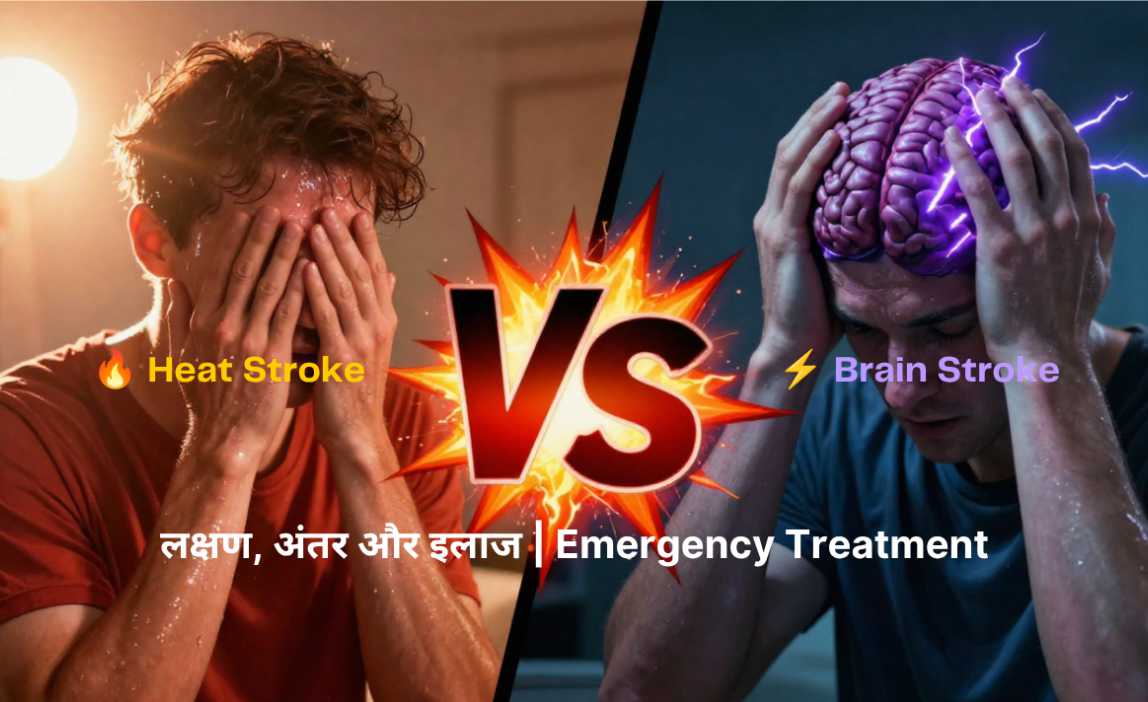
Heat Stroke vs Brain Stroke: Understanding the Difference
Many people confuse Heat Stroke and Brain Stroke because both can occur suddenly and may present with symptoms such as confusion, dizziness, difficulty speaking, or loss of consciousness.
However, these are two completely different medical emergencies with different causes, treatments, and long-term consequences.
Understanding the difference can help patients and caregivers seek the right treatment quickly and potentially save a life.
What Is Heat Stroke?
Heat Stroke is a serious heat-related illness that occurs when the body’s temperature rises to dangerous levels, usually above 104°F (40°C).
It typically develops after prolonged exposure to extreme heat, dehydration, or intense physical activity in hot weather.
Heat stroke is particularly common during summer months and can affect people of all ages.
Common Causes of Heat Stroke
- Prolonged exposure to high temperatures
- Excessive physical activity in hot weather
- Severe dehydration
- Lack of adequate fluid intake
- Staying in poorly ventilated environments
- Wearing heavy clothing during extreme heat
Symptoms of Heat Stroke
Common warning signs include:
- Very high body temperature
- Hot, dry skin
- Excessive sweating (in some cases)
- Severe headache
- Dizziness
- Nausea and vomiting
- Confusion or disorientation
- Rapid heartbeat
- Loss of consciousness
Heat stroke requires immediate medical attention because it can damage vital organs if not treated quickly.
What Is a Brain Stroke?
A Brain Stroke occurs when blood flow to part of the brain is interrupted or when a blood vessel in the brain ruptures.
Without adequate blood supply, brain cells begin to die within minutes.
Brain stroke is a neurological emergency and one of the leading causes of disability and death worldwide.
Types of Brain Stroke
Ischemic Stroke
Occurs when a blood vessel supplying the brain becomes blocked.
Hemorrhagic Stroke
Occurs when a blood vessel in the brain ruptures and causes bleeding.
Transient Ischemic Attack (TIA)
Often called a “mini-stroke,” it is a temporary blockage of blood flow to the brain and serves as an important warning sign.
Common Causes of Brain Stroke
- High Blood Pressure (Hypertension)
- Diabetes
- Smoking
- High Cholesterol
- Heart Disease
- Obesity
- Sedentary Lifestyle
- Family History of Stroke
Symptoms of Brain Stroke
Brain stroke symptoms usually appear suddenly and may include:
- Sudden weakness on one side of the body
- Facial drooping
- Difficulty speaking
- Sudden confusion
- Loss of balance
- Vision problems
- Severe headache
- Difficulty walking
A useful way to identify stroke symptoms is the FAST Test:
F – Face Drooping
One side of the face appears uneven.
A – Arm Weakness
One arm becomes weak or numb.
S – Speech Difficulty
Speech becomes slurred or difficult.
T – Time to Call Emergency Services
Immediate treatment can save brain function and lives.
Heat Stroke vs Brain Stroke: Key Differences
|
Feature |
Heat Stroke |
Brain Stroke |
|
Cause |
Extreme heat and dehydration |
Interrupted blood flow to the brain |
|
Body Temperature |
Usually very high |
Usually normal |
|
Main Organ Affected |
Entire body |
Brain |
|
Common Trigger |
Hot weather |
Blood vessel blockage or rupture |
|
Neurological Symptoms |
Confusion, fainting |
Weakness, speech difficulty, paralysis |
|
Emergency Treatment |
Cooling and hydration |
Stroke-specific emergency care |
Can Heat Stroke Cause Brain Damage?
Yes.
If body temperature remains dangerously high for a prolonged period, heat stroke can lead to:
- Brain swelling
- Seizures
- Memory problems
- Permanent neurological damage
- Organ failure
This is why heat stroke should never be ignored.
When Should You Seek Emergency Medical Care?
Seek immediate emergency care if a person experiences:
Possible Heat Stroke Symptoms
- Body temperature above 104°F
- Loss of consciousness
- Severe confusion
- Hot, dry skin
Possible Brain Stroke Symptoms
- Sudden weakness
- Facial drooping
- Slurred speech
- Vision loss
- Difficulty walking
Both conditions require urgent medical evaluation.
Why Early Diagnosis Matters
Many people delay treatment because they assume symptoms will improve on their own.
In stroke care, every minute matters.
Brain cells begin to die within minutes after blood flow is interrupted.
Similarly, untreated heat stroke can rapidly damage the brain, kidneys, heart, and liver.
Prompt diagnosis and treatment significantly improve outcomes.
Prevention Tips
Preventing Heat Stroke
- Drink plenty of water
- Avoid direct sun exposure during peak hours
- Wear light-colored clothing
- Stay in cool environments
- Take frequent breaks during outdoor work
Preventing Brain Stroke
- Control blood pressure
- Manage diabetes
- Exercise regularly
- Avoid smoking
- Maintain healthy cholesterol levels
- Follow regular medical checkups
When Should You Consult a Neurologist?
You should seek neurological evaluation if you experience:
- Sudden weakness
- Recurrent dizziness
- Speech difficulties
- Memory changes
- Severe unexplained headaches
- Suspected stroke symptoms
Early consultation may help prevent long-term neurological complications.
FAQs
Q1. Are heat stroke and brain stroke the same condition?
No. Heat stroke is caused by overheating of the body, while brain stroke occurs due to interrupted blood flow or bleeding in the brain.
Q2. Can heat stroke cause neurological problems?
Yes. Severe heat stroke can lead to brain swelling, seizures, memory problems, and long-term neurological complications.
Q3. What are the first warning signs of a brain stroke?
Sudden weakness, facial drooping, speech difficulty, vision changes, and loss of balance are common warning signs.
Q4. Which condition is more dangerous?
Both are medical emergencies and can be life-threatening if treatment is delayed.
Q5. When should I seek emergency medical care?
Seek immediate medical attention if you experience confusion, loss of consciousness, sudden weakness, speech difficulty, or severe neurological symptoms.
Note: This blog is for informational purposes only and should not replace professional medical advice.
.
𝐄𝐧𝐪𝐮𝐢𝐫𝐲 & 𝐀𝐩𝐩𝐨𝐢𝐧𝐭𝐦𝐞𝐧𝐭 : 𝟎𝟗𝟏𝟏𝟕𝟔 𝟎𝟎𝟔𝟎𝟎
𝐄𝐦𝐞𝐫𝐠𝐞𝐧𝐜𝐲 𝐚𝐧𝐝 𝐀𝐦𝐛𝐮𝐥𝐚𝐧𝐜𝐞: 𝟎𝟗𝟏𝟏𝟕𝟓𝟎𝟎 𝟓𝟎𝟎
𝐰𝐞𝐛𝐬𝐢𝐭𝐞 — https://medazhospital.com/best-neurology-hospital-patna/
𝗬𝗼𝘂𝘁𝘂𝗯𝗲 𝗟𝗶𝗻𝗸 –www.youtube.com/@medazhospital